
How to Start Singing at Home: 10 Practical Steps for Beginners
MusicChamps
Music Educator
Introduction
Singing is one of the most beautiful and expressive forms of art that exists. The good news is — you don't need a studio, a teacher, or expensive equipment to begin. Starting your singing journey from home can be both enjoyable and deeply rewarding, whether you aspire to become a professional performer or simply want to experience the joy and therapeutic benefits of music.
Here are 10 practical steps to start singing with confidence.
Step 1: Find Your Space
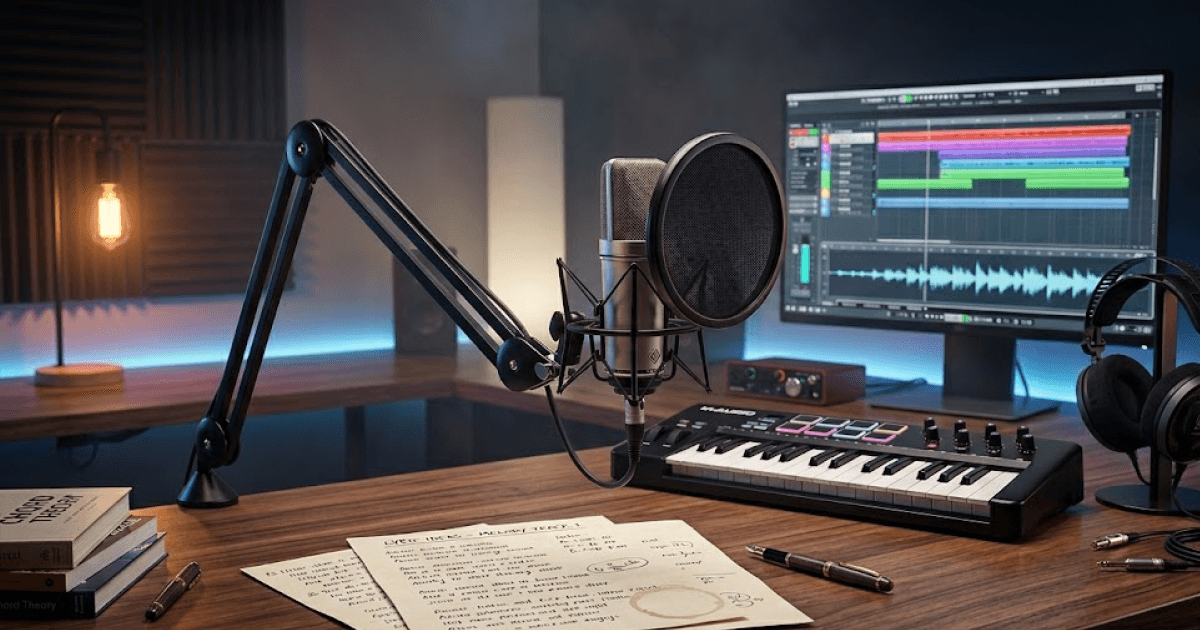
Choose a comfortable, quiet space in your home where you feel relaxed and free from self-consciousness. A well-lit room with reasonable acoustics (not too echoey, not too dead) will help you hear your voice clearly.
Set up a small recording device or use your phone to capture your practice — this becomes an invaluable tool for self-evaluation.
Step 2: Warm Up Your Voice
Your vocal cords are muscles. Just as an athlete stretches before exercise, your voice needs warming up before a practice session.
Simple warm-up exercises:
- Gentle hums — start low and gradually move higher
- Lip trills (buzzing your lips like a motorboat sound)
- Vocal sirens — slide from your lowest to highest comfortable note like a siren
Never skip warm-ups. Singing cold can strain or damage the vocal cords.
Step 3: Master Breathing Technique
Correct breathing is the foundation of good singing. The technique to learn is diaphragmatic breathing:
- Inhale deeply so your belly expands — not just your chest
- Allow your diaphragm to descend as you breathe in
- Exhale slowly and steadily, creating a controlled, supported sound
This technique gives your voice power, control, and stamina.
Step 4: Practice Vocal Exercises
Vocal exercises develop the strength, range, and flexibility of your voice.
Start with:
- Scale exercises — move up and down the notes within your comfortable range
- Vowel exercises — sustain notes on A, E, I, O, U with consistent tone
- Range extension — gradually push your comfortable range higher and lower over weeks
Step 5: Learn Basic Music Theory
Understanding basic music theory accelerates your singing development dramatically. Start with:
- Note names (Sa Re Ga Ma Pa Dha Ni / Do Re Mi Fa Sol La Ti)
- Key signatures and how to identify the key of a song
- Scales — major and minor — and how they feel emotionally
- Rhythm — understanding beats and tempo
This knowledge allows you to sing in harmony with other voices or instruments.
Step 6: Choose Songs Wisely
Select songs that match your natural vocal range — neither too high nor too low.
Beginners should start with:
- Songs with a slow to medium tempo
- Simple, repetitive melodies
- Limited pitch range (within one octave)
As you improve, gradually add more challenging songs to your repertoire using the Kaizen method — continuous, small daily improvements.
Step 7: Record and Listen
Recording your practice is one of the most powerful tools available to a singer.
Listen back critically for:
- Pitch accuracy — are you in tune?
- Tone quality — is your voice clear and consistent?
- Articulation — are the words clear and well-pronounced?
Celebrate progress over time — comparing recordings from week 1 to week 8 will show you how far you've come.
Step 8: Use Online Resources
There is an abundance of high-quality singing tutorials, vocal exercises, and lessons freely available online. Platforms like YouTube offer everything from basic breath control to advanced techniques from professional vocalists.
Step 9: Practice Regularly
There is no substitute for consistent practice. Even 15–20 minutes daily will produce results faster than occasional long sessions.
Set a dedicated practice time and stick to it. Regular practice:
- Builds muscle memory in the vocal cords
- Develops a reliable vocal technique
- Steadily expands your range and stamina
Step 10: Embrace Confidence and Passion
Singing is ultimately about emotion and expression. Technical skill develops with practice — but confidence must be cultivated consciously.
- Sing for the joy of it, not just to perform perfectly
- Experiment with different songs, styles, and emotions
- Believe in your unique voice — every voice has something special to offer
The most compelling singers are not always the most technically perfect — they are the ones who sing with genuine feeling and conviction.
Additional Resources
Frequently Asked Questions
How can I start singing at home as a complete beginner?
Start by finding a quiet, comfortable space to practice. Begin with simple vocal warm-ups like humming and lip trills. Focus on breathing technique (diaphragmatic breathing), then practice simple scales within your natural range. Gradually expand your repertoire as your confidence grows.
What is diaphragmatic breathing and why is it important for singing?
Diaphragmatic breathing means inhaling deeply so your belly expands (not just your chest). This engages the diaphragm muscle, providing better breath support for your voice. It gives singers more control, power, and consistency in their sound.
How often should I practice singing at home?
Consistency matters more than duration. Even 15–20 minutes of focused daily practice is more effective than occasional long sessions. Regular practice builds muscle memory in the vocal cords and improves your voice steadily over time.
Should I record myself while practising singing?
Yes, absolutely. Recording yourself is one of the most effective tools for improvement. Listening back helps you identify issues with pitch accuracy, tone quality, and articulation that are difficult to notice while you are singing. Many professional singers record every practice session.