What is Swaram? The Seven Notes of Carnatic Music Explained
MusicChamps
Music Educator
Introduction
The 7 basic notes are the core of music across all traditions. In Hindustani classical music they are known as the Saat Swaras, and in Carnatic music they are called the Swaram (also spelled Svaram). Though the two traditions share similarities, the differences between them are significant and worth understanding clearly.
In this post, we explore the Carnatic Swaram in depth.
What is Swaram?
Every form of music is built upon a set of fundamental notes from which the entire genre is constructed. In Carnatic music, these foundational notes are called Swarams.
The seven Swarams in Carnatic music are:
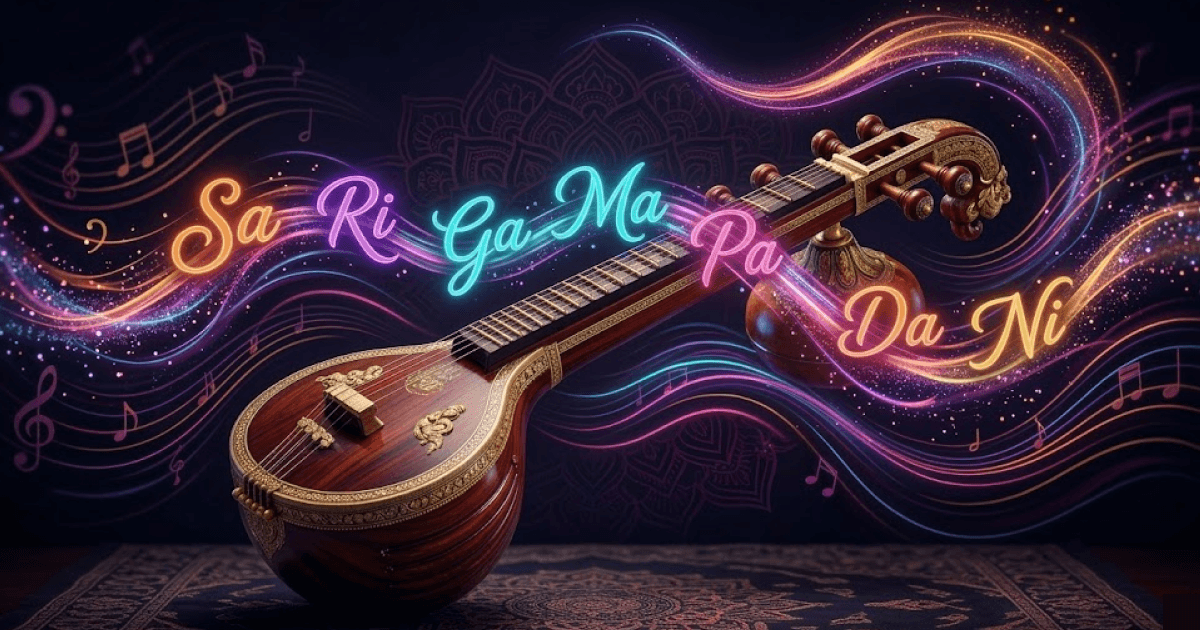
Sa — Ri — Ga — Ma — Pa — Da — Ni — Sa
The Seven Swarams Explained
| Swaram | Full Name | Role in Music | | ------ | --------- | ------------------------------------------------------------------------- | | Sa | Shadjam | The base of all notes — the root from which all others are measured | | Ri | Rishabham | Second note — comparatively higher pitched, adds a unique melodic quality | | Ga | Gandharam | Third note — adds sweetness to the combined melody | | Ma | Madhyamam | Fourth note — plays a vital role in evoking different moods and emotions | | Pa | Panchamam | Fifth note — provides stability and balance to the melodic progression | | Da | Dhaivatam | Sixth note — adds a touch of melancholy and depth to the raga | | Ni | Nishadam | Seventh note — brings a sense of resolution and completeness |
Swarams in Carnatic Performance
During a Carnatic music performance, the artist explores and elaborates on a Raga through Swarams. This improvisational segment is known as Ragalapana (or Alapana). It allows the musician to:
- Showcase creativity and technical virtuosity
- Express the unique emotional character of the Raga
- Weave intricate musical patterns before the main composition begins
Melodies in Carnatic music are constructed by combining the seven Swarams in various sequences. The ascending order is called Arohanam and the descending order is called Avarohanam. Different combinations of Swarams give rise to hundreds of unique Ragas, each with its own emotional and aesthetic character.
6 Tips to Practice Swaram
1. Understand the Basics First Before diving into Swaram practice, familiarise yourself with all seven Swarams — Sa, Ri, Ga, Ma, Pa, Da, and Ni. Learn their positions and corresponding pitches. Understanding the structure of Ragas and the significance of each Swaram provides a strong foundation.
2. Vocalization is Key The voice is the primary instrument in Carnatic music. Start by vocalising each Swaram with clarity and precision. Focus on maintaining proper pitch, tone, and pronunciation. Regular vocal exercises will significantly improve your expressive ability.
3. Gradual Progression Begin with simple Swaram patterns and gradually progress to more complex ones. Practice ascending and descending patterns (Arohanam and Avarohanam) in different Ragas. Start at slow tempos and increase pace as you gain confidence.
4. Rhythmic Accompaniment Practice Swarams alongside a rhythmic accompaniment — a metronome or a simple Tala (rhythmic cycle). This develops a strong sense of timing and keeps you in sync with the beat.
5. Alankarams and Geethams Alankarams and Geethams are structured exercises that combine Swarams in various patterns. Work on these regularly to enhance your fluency and agility across different Swaram sequences.
6. Explore Ragas through Ragalapana Immerse yourself in exploring various Ragas through Ragalapana or Alapana. Listen to recordings of seasoned musicians for inspiration and to internalise how Swarams are used to build emotional depth.
Additional Resources
Frequently Asked Questions
What is Swaram in Carnatic music?
Swaram refers to the seven basic musical notes in Carnatic music — Sa, Ri, Ga, Ma, Pa, Da, Ni. These seven notes form the foundation of all melodies, ragas, and compositions in Carnatic classical music.
What is the difference between Swaras and Swaram?
Swaras is the term used in Hindustani classical music for the seven notes (Sa Re Ga Ma Pa Dha Ni), while Swaram is the equivalent term used in Carnatic music. The notes are Sa Ri Ga Ma Pa Da Ni in Carnatic music, with Ri and Da replacing Re and Dha.
What is Ragalapana in Carnatic music?
Ragalapana (also called Alapana) is an improvisational segment in a Carnatic performance where the artist explores and elaborates on a Raga through Swarams. It allows the musician to express the Raga's unique emotions and nuances through intricate melodic patterns.
What are Alankarams in Carnatic music?
Alankarams are structured exercises in Carnatic music that involve combining Swarams in various patterns to develop vocal fluency and agility. They are a fundamental part of a student's daily practice routine.