How to Read Guitar Tabs: A Complete Beginner's Guide to Guitar Tablature
MusicChamps
Music Educator
Introduction
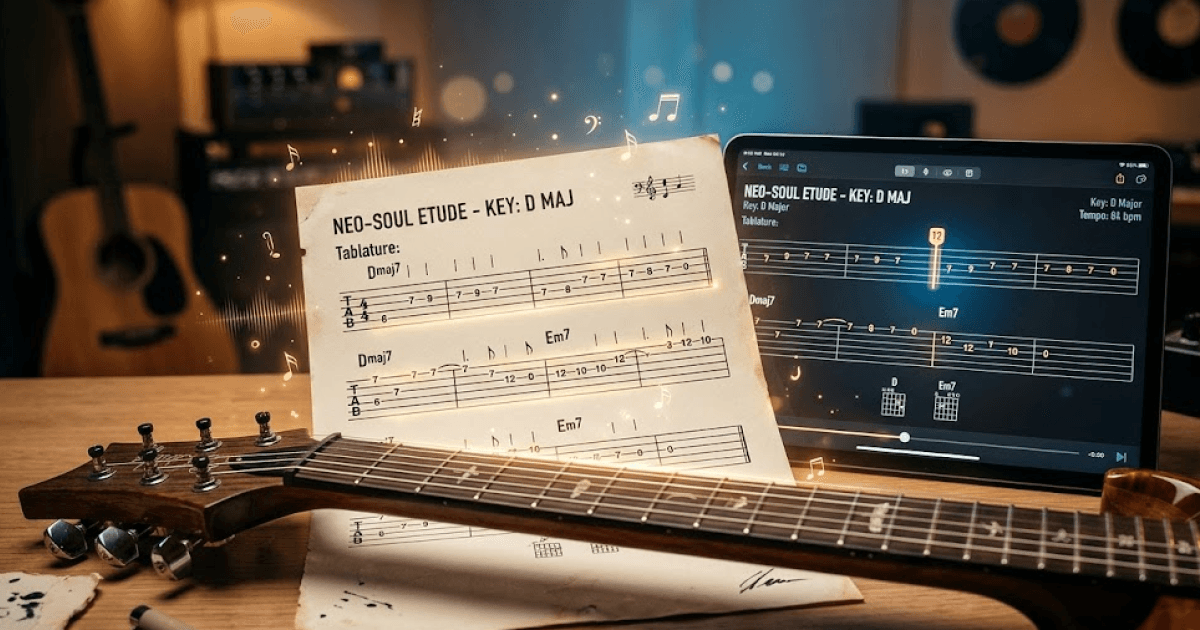
Guitar tabs (short for tablature) are one of the most beginner-friendly ways to learn guitar. Unlike traditional sheet music, tabs don't require you to read musical notation — they tell you exactly where to put your fingers on the guitar neck.
Understanding the Guitar Tab Diagram
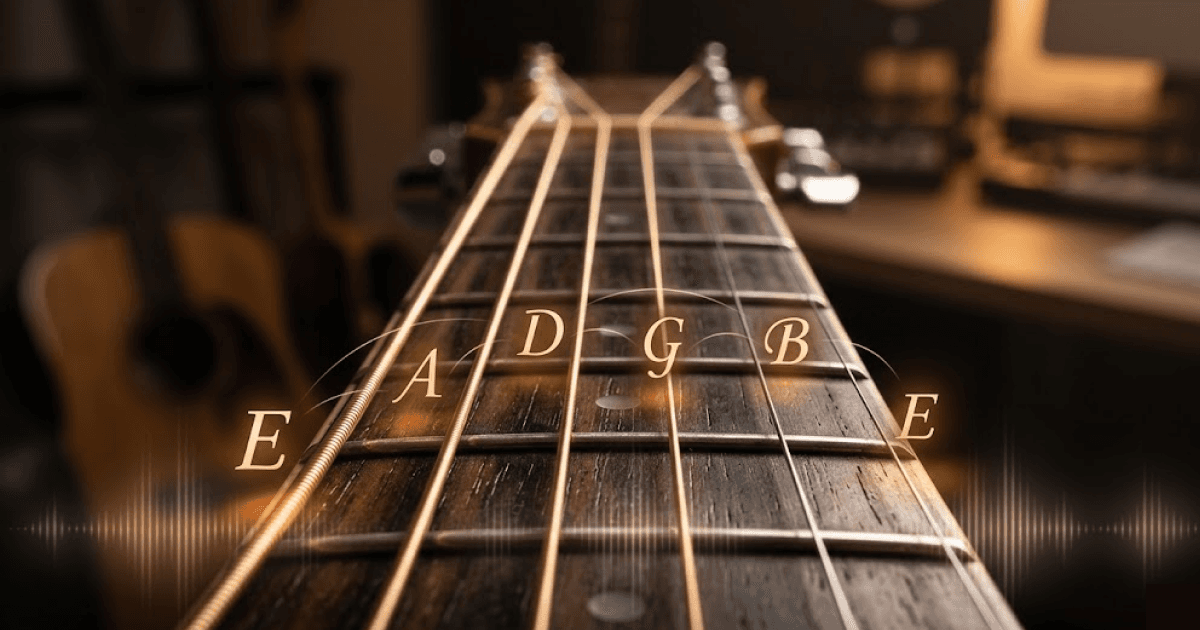
A guitar tab consists of 6 horizontal lines, each representing one string:
e |-------------------------------------------| ← 1st string (High E, thinnest)
B |-------------------------------------------|
G |-------------------------------------------|
D |-------------------------------------------|
A |-------------------------------------------|
E |-------------------------------------------| ← 6th string (Low E, thickest)
- The bottom line = 6th string (Low E — thickest)
- The top line = 1st string (High E — thinnest)
This is the opposite of how the guitar looks when you hold it — the low strings are at the bottom of the tab diagram.
Reading the Numbers
Numbers on each string line indicate the fret to press:
| Number | Meaning | | ------ | -------------------------------------------- | | 0 | Open string — play without pressing any fret | | 1 | Press the 1st fret | | 2 | Press the 2nd fret | | 5 | Press the 5th fret |
Example — single note:
e |---|
B |---|
G |---|
D |-2-|  ← Press 2nd fret on D string
A |---|
E |---|
Reading Single Notes
To play a single note:
- Find the string (horizontal line)
- Press the fret number shown
- Pick only that string
Example — a simple melody:
e |--0--2--3--2--0--|
B |-----------------|
G |-----------------|
D |-----------------|
A |-----------------|
E |-----------------|
Play the 1st string open, then 2nd fret, then 3rd fret, then back down.
Playing Chords from Tabs
Chords are shown as numbers stacked vertically — press all indicated frets simultaneously and strum:
e |-0-|
B |-1-|
G |-0-|
D |-2-|
A |-3-|
E |-x-|  ← x = mute this string (don't play it)
This is a C major chord.
Rhythm and Timing
Guitar tabs don't always show rhythm explicitly — this is one limitation compared to sheet music. To get the rhythm right:
- Listen to the original song while reading the tab
- Pay attention to strumming patterns and note durations
Special Symbols in Tabs
| Symbol | Technique | | -------- | --------------------- | | h | Hammer-on (e.g. 2h4) | | p | Pull-off (e.g. 4p2) | | b | Bend (e.g. 7b9) | | / | Slide up (e.g. 5/7) | | **** | Slide down (e.g. 7\5) | | ~ | Vibrato | | x | Muted/dead note |
Tips for Beginners
- Start with easy songs — fewer string changes and simpler fret patterns
- Prioritise slow songs — holding the strings cleanly matters more than speed
- Focus on finger placement — press close to the fret for clean notes
- Listen while you play — match the tab to the sound of the recording
Additional Resources
Frequently Asked Questions
What is a guitar tab?
A guitar tab (tablature) is a user-friendly system of notating guitar music using numbers on a diagram of the six strings. Numbers indicate which fret to press on each string, making it easier for beginners to start playing songs without learning traditional sheet music.
How do you read numbers on a guitar tab?
Each horizontal line in a guitar tab represents one string. A number on a line tells you which fret to press on that string. The number 0 means play the string open (without pressing any fret). Numbers 1, 2, 3, etc. indicate the corresponding fret number to press.
What is the difference between guitar tabs and sheet music?
Guitar tabs show you exactly where to put your fingers on the guitar neck — they are visual and instrument-specific. Sheet music shows musical notes on a staff and is more universal but requires knowledge of music theory to read. Most beginners start with tabs as they are faster to learn.
How do you play chords from guitar tabs?
Chords in guitar tabs are shown as numbers stacked vertically on multiple strings simultaneously. You press all the indicated frets at the same time and strum all the indicated strings together.