Simple Piano Notes for Beginners: Treble Clef, Bass Clef and First Songs
MusicChamps
Music Educator
Introduction
The piano is a beautifully accessible instrument — and the journey to playing your first melody begins with understanding a few simple notations. Once you grasp the basics of reading notes, your musical journey becomes significantly smoother and more enjoyable.
The Piano Staff: Two Clefs
Piano music is written on a grand staff consisting of two connected staves:
| Clef | Symbol | Hand | Notes | | ------------------------ | ------ | ---------- | -------------------- | | Treble Clef (G Clef) | 𝄞 | Right hand | Higher-pitched notes | | Bass Clef (F Clef) | 𝄢 | Left hand | Lower-pitched notes |
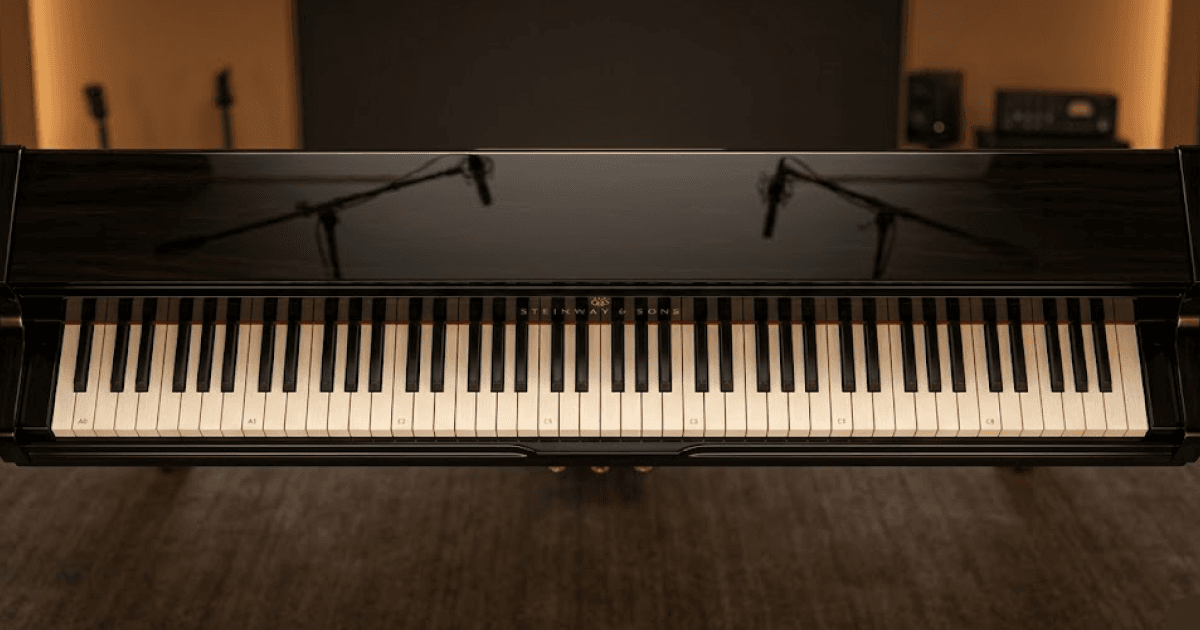
Middle C sits between the two staves — on the first ledger line below the treble staff or the first ledger line above the bass staff. It is the central reference point for both hands.
Treble Clef Notes
Starting from Middle C and ascending, the notes on the treble staff are:
C — D — E — F — G — A — B — C
The notes alternate between lines and spaces of the staff. A helpful memory phrase for the lines of the treble staff:
Every Good Boy Does Fine (E, G, B, D, F)
And the spaces spell the word:
F-A-C-E
Bass Clef Notes
The bass clef handles lower-pitched notes, typically played by the left hand. Starting from Middle C descending, the bass clef notes are:
C — B — A — G — F — E — D — C
Memory phrase for bass clef lines:
Good Boys Do Fine Always (G, B, D, F, A)
Sharp and Flat Notes
| Symbol | Name | Effect | Piano Key | | ------ | ----- | ---------------------------- | ---------------------- | | # | Sharp | Raises pitch by one semitone | Black key to the right | | ♭ | Flat | Lowers pitch by one semitone | Black key to the left |
Example: Note A is a white key. A# (A sharp) is the black key immediately to its right — one semitone higher. A♭ (A flat) is the black key to its left — one semitone lower.
Your First Songs
Twinkle Twinkle Little Star
C C G G  (Twinkle twinkle)
A A G~   (little star)
F F E E  (How I wonder)
D D C    (what you are)
Mary Had a Little Lamb
G F# E F#  G G G~    (Mary had a little lamb)
F# F# F#   G B B~    (Little lamb, little lamb)
G F# E F#  G G G G   (Mary had a little lamb)
F# F# G F# E         (Fleece was white as snow)
Tips for Practicing Piano Notes
Focus on accuracy, not speed When starting out, play slowly and hit the right notes cleanly. Speed comes naturally with repetition — accuracy must be built first.
Hand Position Keep your fingers curved (as if holding a ball) and your wrists relaxed. Good hand position prevents injury and improves technique.
Use a Metronome Practice with a metronome from day one. Consistent timing is one of the most important skills in music and much easier to develop early than to correct later.
Be Patient Piano is a skill that rewards consistent, patient practice. Celebrate small milestones — playing a full song cleanly is a genuine achievement.
Additional Resources
Frequently Asked Questions
What is middle C on the piano?
Middle C is the C note located at the center of the piano keyboard. It appears on the first ledger line below the treble staff and the first ledger line above the bass staff. It serves as the reference point for both hands and is the starting note for most beginner piano lessons.
What is the difference between treble clef and bass clef?
The treble clef (G clef) represents higher-pitched notes and is typically played with the right hand. The bass clef (F clef) represents lower-pitched notes and is typically played with the left hand. Together, both clefs cover the full range of the piano.
What do sharp and flat signs mean in piano music?
A sharp sign (#) raises a note by one semitone (one half step). A flat sign (♭) lowers a note by one semitone. On a piano, sharps and flats correspond to the black keys — for example, C# is the black key immediately to the right of C.
What are the best songs for beginner piano players?
Popular beginner piano songs include Twinkle Twinkle Little Star, Mary Had a Little Lamb, Happy Birthday, Ode to Joy, and Do Re Mi. These songs use a limited range of notes and simple rhythms, making them perfect for building foundational skills.