How Many Keys Does a Piano Have? White Keys, Black Keys and Octaves Explained
MusicChamps
Music Educator
Introduction
The piano is one of the most expressive and versatile instruments ever created — and a significant part of that versatility comes from its range of keys. Whether you're buying your first keyboard or simply curious about the instrument, understanding the layout and number of keys is essential.
The Standard Piano: 88 Keys
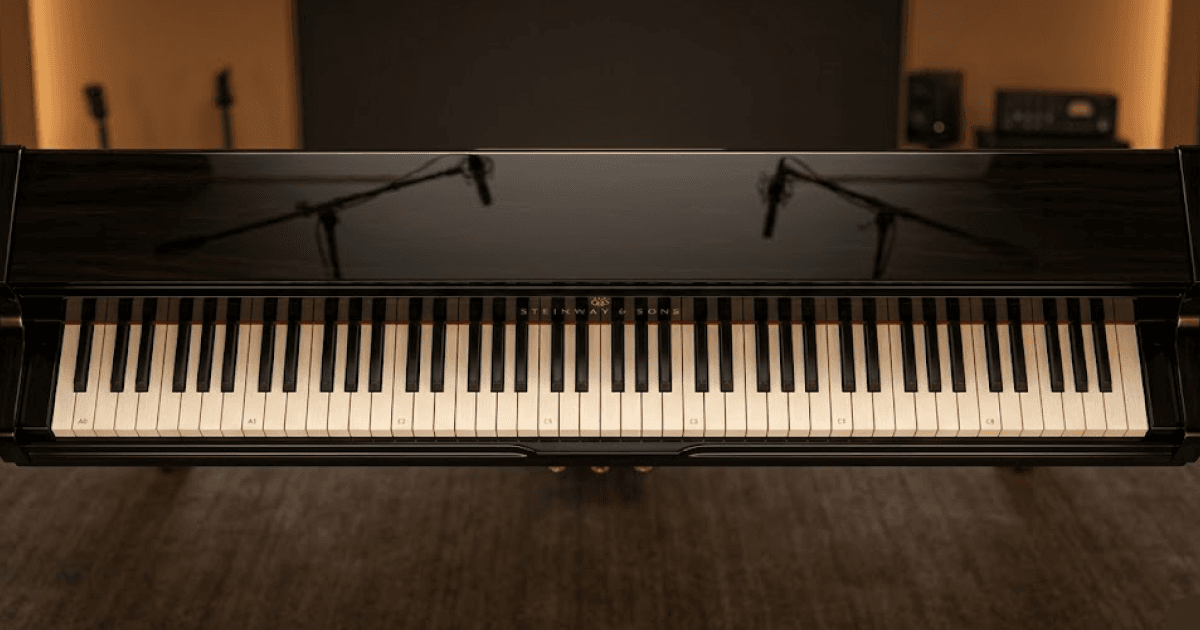
A standard piano has 88 keys, arranged in a continuous repeating pattern of white and black keys. These 88 keys span:
- 7 full octaves plus an additional minor third
- A pitch range from the lowest note A0 (27.5 Hz) to the highest note C8 (4,186 Hz)
White Keys and Black Keys
| Key Type | Count | Musical Name | Notes | | -------------- | ------ | ------------ | ------------------------ | | White keys | 52 | Naturals | A B C D E F G | | Black keys | 36 | Accidentals | Sharps (#) and flats (b) | | Total | 88 | | |
The white keys represent the seven notes of the musical alphabet: A, B, C, D, E, F, and G.
The black keys represent the sharp (#) or flat (b) versions of these notes. They are arranged in a repeating pattern of groups of two and three — this pattern is the key to navigating the keyboard and is the same across every octave.
What is an Octave?
An octave is the interval between two notes of the same name but at different pitch levels. On the piano:
- One octave = 12 keys (7 white + 5 black)
- The same pattern repeats across all 7+ octaves
- Notes in higher octaves sound at double the frequency of the same note one octave lower
Extended Pianos
While 88 keys is standard, some pianos go further:
| Piano | Keys | Notes | | -------------- | ---- | -------------------------------------- | | Standard Piano | 88 | A0 to C8 | | Bösendorfer 97 | 97 | Extends the bass range by 9 extra keys |
The extended keys on the Bösendorfer are sometimes painted black to distinguish them from the standard range.
Why 88 Keys?
The 88-key standard gives pianists access to the complete range required for virtually all classical and modern music. Composers from Bach to Beethoven to modern composers have written within this range, making it the ideal number for a complete musical repertoire.
Additional Resources
Frequently Asked Questions
How many keys does a standard piano have?
A standard piano has 88 keys — 52 white keys and 36 black keys. These span a range of seven octaves plus a minor third, from A0 (the lowest note) to C8 (the highest note).
Why does a piano have 88 keys?
The 88-key piano became the standard because it provides a range sufficient to perform virtually the entire Western classical and modern repertoire — from the deepest bass notes to the highest treble. Steinway established this standard in the 1880s and it has remained ever since.
What is the difference between white and black keys on a piano?
White keys (naturals) represent the seven main notes of the musical alphabet: A, B, C, D, E, F, and G. Black keys (accidentals) represent the sharp (#) or flat (b) versions of these notes. Black keys are grouped in repeating patterns of two and three across the keyboard.
Are there pianos with more than 88 keys?
Yes. The Bösendorfer Imperial Grand Piano has 97 keys, extending the lower range by an additional nine notes. However, these extended pianos are rare and used primarily for specific repertoire that requires the extra bass notes.